

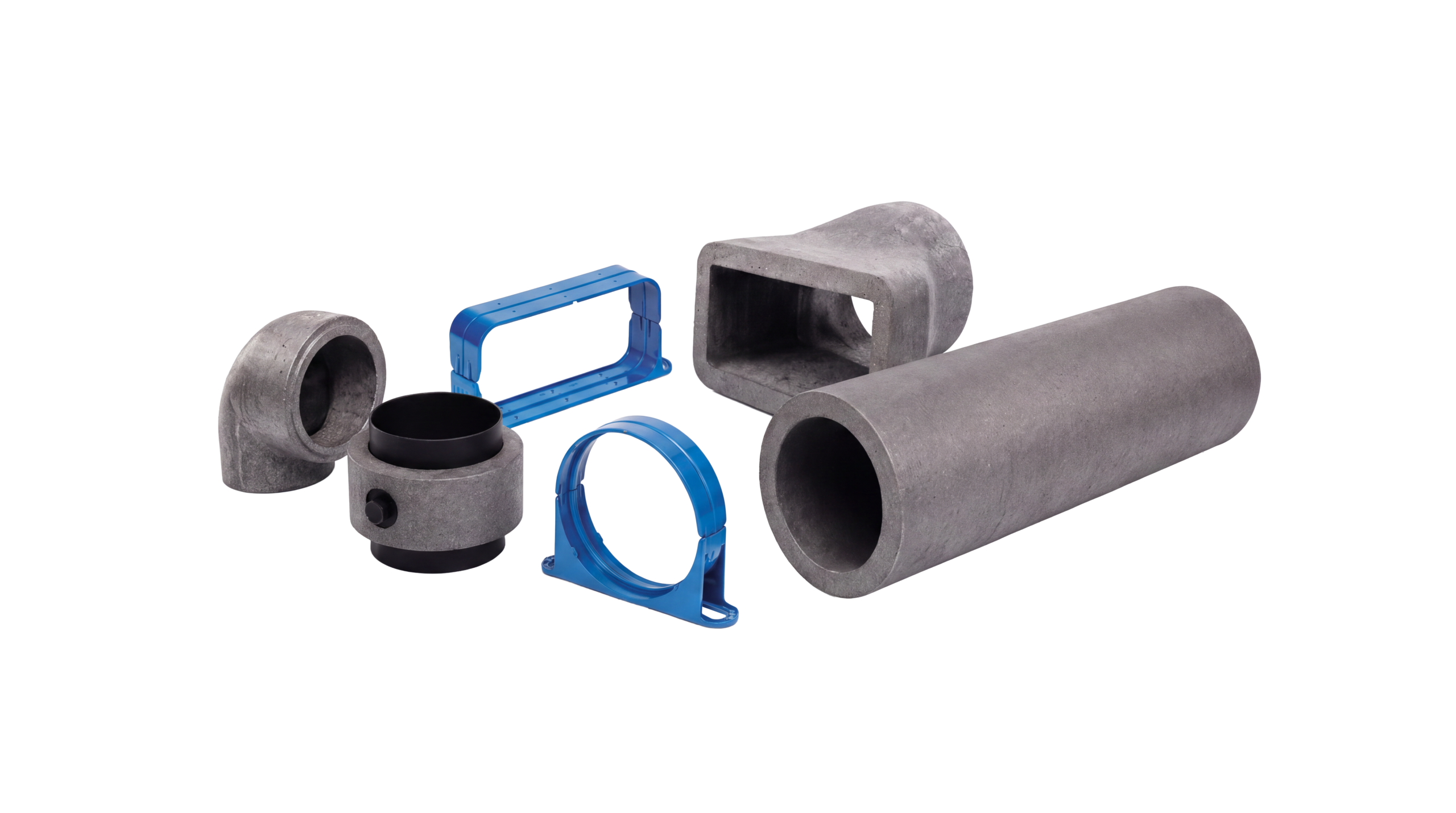
Introduction of a new all-in-one insulated ducting range gives installers and specifiers greater choice when selecting the right ducting solution for individual residential ventilation projects. Introduced alongside the existing Domus Thermal insulation range, the new system combines the ventilation duct and thermal insulation within one lightweight, ready-to-install component. Its distinctive clamping mechanism creates a secure connection without the need for separate sealant or tape, helping to make installation straightforward, particularly in lofts, ceiling voids and other restricted spaces.
The new Domus Thermal range has also been developed using eco-efficient materials and is fully compliant with relevant Building Regulations requirements for insulated ventilation ductwork. Available in rectangular formats including 204 x 60mm and 220 x 90mm, the range incorporates coordinated straight lengths together with 45° and 90° horizontal and vertical bends. This enables installers to create continuous insulated duct runs using matched components.
The addition gives customers a choice of two different approaches to thermal ducting. Domus Ventilation’s established Domus Thermal system uses purpose-designed insulation fitted around its rigid ductwork, while the new all-in-one range integrates the duct and insulation into a single component. This allows installers and specifiers to select the solution best suited to the requirements of the individual project, taking into account factors such as installation method, available space, duct route and site conditions.
Both solutions are designed for ventilation ductwork passing through unheated spaces and voids, where insufficient insulation can allow condensation to form. They are particularly suited to intake and exhaust ductwork serving Mechanical Ventilation with Heat Recovery (MVHR) systems.
In an MVHR installation, warm, moisture-laden extract air may travel through ductwork located in a cold loft or roof space. Conversely, cold incoming air may be carried through ducts situated within the heated part of a property. In either case, inadequate insulation can result in condensation forming within or on the outside of the ductwork. Effective thermal insulation helps limit heat transfer across the duct wall, reducing the risk of condensation and helping to protect both the ventilation installation and surrounding building materials.
“Different projects can place very different demands on the ductwork installation, which is why choice is important,” states Paul Williams, Product Manager at Domus Ventilation. “Rather than there being one solution for every application, our aim is to give installers and specifiers the flexibility to select the right product for the right project. Together, the two ranges strengthen the thermal ducting options available from Domus and make it easier to specify a solution appropriate to the individual installation.”
Correct ductwork selection and installation are fundamental to ventilation system performance. Excessive resistance, air leakage, poorly formed bends or unsuitable components can prevent a ventilation appliance from delivering its intended airflow rates, while potentially increasing noise and energy consumption.
The two Domus Thermal ranges form part of Domus Ventilation’s extensive portfolio of residential ventilation ducting and ancillaries, which includes rigid rectangular and circular ducting, semi-rigid radial systems, flexible and acoustic ducting, air valves, grilles, external terminals and associated installation components.
By Paul Williams, Domus Ventilation Product Manager